The Shower Filter Buying Guide: What Matters, What's Marketing
Shower filters run from $25 to $170, and the price mostly doesn't track filtration. It tracks branding. This guide gives you the five things worth comparing, the four traps worth dodging, and a decision path that gets you out in ten minutes.
Step Zero: Know What You're Buying
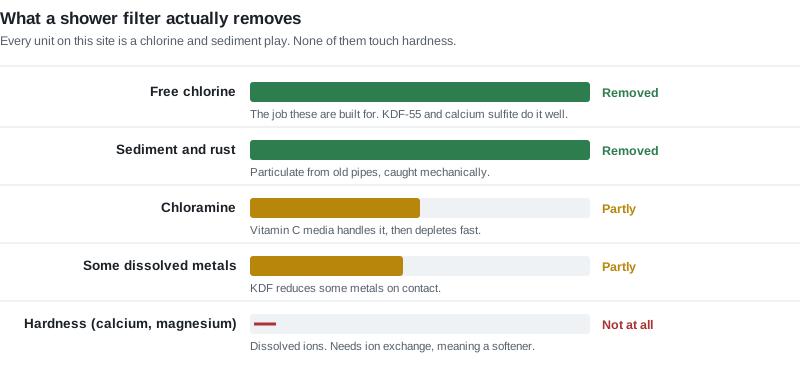
A shower filter removes chlorine, sediment, and some metals. It does not remove the calcium and magnesium that make water hard. No cartridge product does; the chemistry needs a full water softener. If you skipped it, read do shower filters actually work first, because every trap below exploits people who don't know this.
The Five Things That Matter
1. NSF/ANSI 177 certification
The only third-party standard for shower filters. It verifies free chlorine reduction, nothing else, but a verified something beats a claimed everything. Only a few manufacturers hold it; Sprite and Weddell are the two on our list. Uncertified isn't disqualifying at $35. At $150 it should bother you.
2. Media type
KDF-55 (copper-zinc) and calcium sulfite are the proven chlorine media at shower temperatures and flow. Vitamin C is the specialist for chloramine, the more stubborn disinfectant some cities use, but it depletes fast. Activated carbon helps but weakens in hot water. A good filter leads with KDF or calcium sulfite; check your city's water report to see if chloramine matters for you.
3. Cartridge cost per year, not sticker price
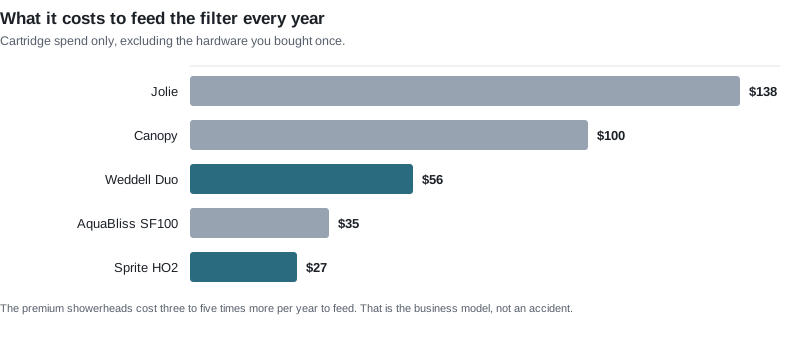
The hardware is a one-time cost; cartridges are forever. Sprite runs ~$27 a year, Jolie ~$135. Over three years the "cheap" $169 showerhead becomes the most expensive thing in the bathroom. Full table in the replacement guide.
4. Form factor
Inline units (Weddell, Sprite, AquaBliss) screw in behind your existing showerhead and preserve whatever spray you already like. Integrated heads (Jolie, Canopy) replace everything, which is a feature when your current head is bad and a waste when it's good.
5. Flow rate
Filters add resistance. The best units engineer around it (Canopy tested fastest at 2.33 GPM), cheap ones fade as media clogs, and hard water accelerates the fade. If your home already has weak pressure, weight this spec heavily.
The Four Traps
- "Softens water." False on any cartridge product, and a signal to distrust the rest of the listing.
- Stage inflation. "15-stage" counts screens and beads. Three or four media do the work. More stages usually means more filler, not more filtration.
- Uncertified percentage claims. "Removes 99.9% of chlorine" with no NSF listing means the brand tested itself. Discount accordingly.
- Beauty-transformation promises. Chlorine removal genuinely helps dry skin and irritated scalps. It will not cure eczema, regrow hair, or transform anything. Sites and sellers promising that are monetizing hope. The evidence on hair specifically is in hard water and hair loss.
The Decision Path
- Under $50, just experimenting: AquaBliss SF100. Cheapest legitimate entry.
- Under $60, want a certificate: Sprite HO2. Certified, one swap a year.
- Best filtration, price no object under $100: Weddell Duo. Certified plus the best independent lab results.
- Replacing an ugly showerhead anyway, budget flexible: Canopy for flow and refill cost, Jolie for hardware and looks. Numbers side by side in the comparison.
- Renting: any of the above installs tool-free; the full playbook is the renters guide.
- Scale on glass, spots on dishes, own your home: stop shopping filters. Price a whole-home softener; it's the only thing that fixes those symptoms.
The one-paragraph version: buy on certification, media, and cartridge cost per year. Ignore stage counts, softening language, and transformation promises. $35 buys the experiment, $41 buys a certificate, $89 buys the best evidence, $150+ buys design and a subscription. All of them filter chlorine; none of them soften water.